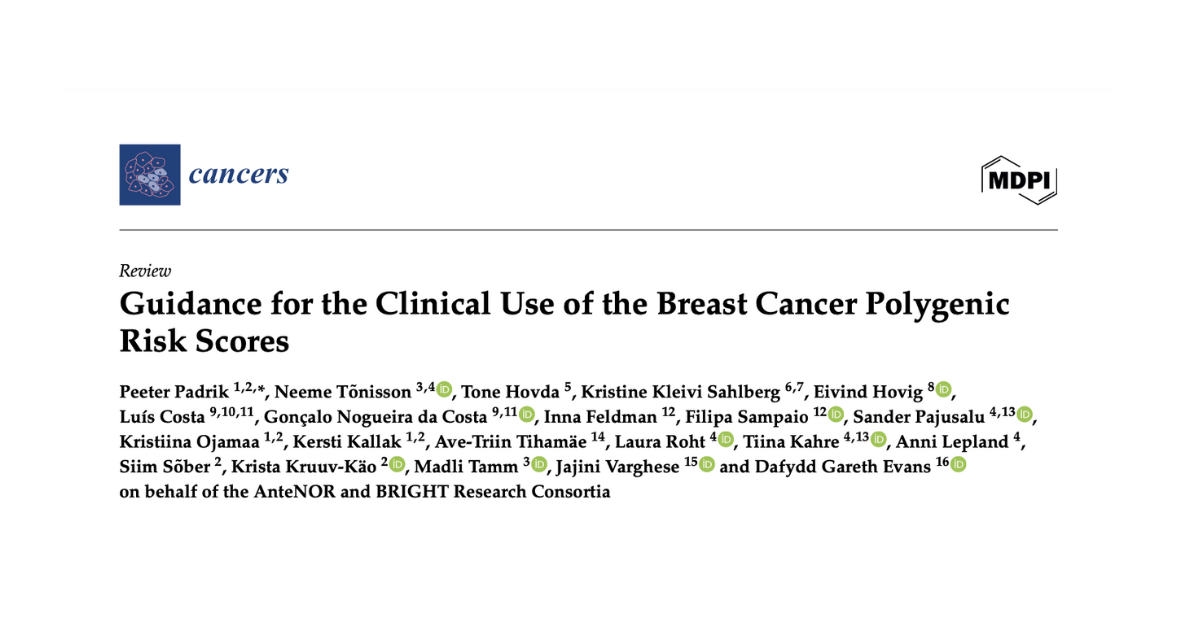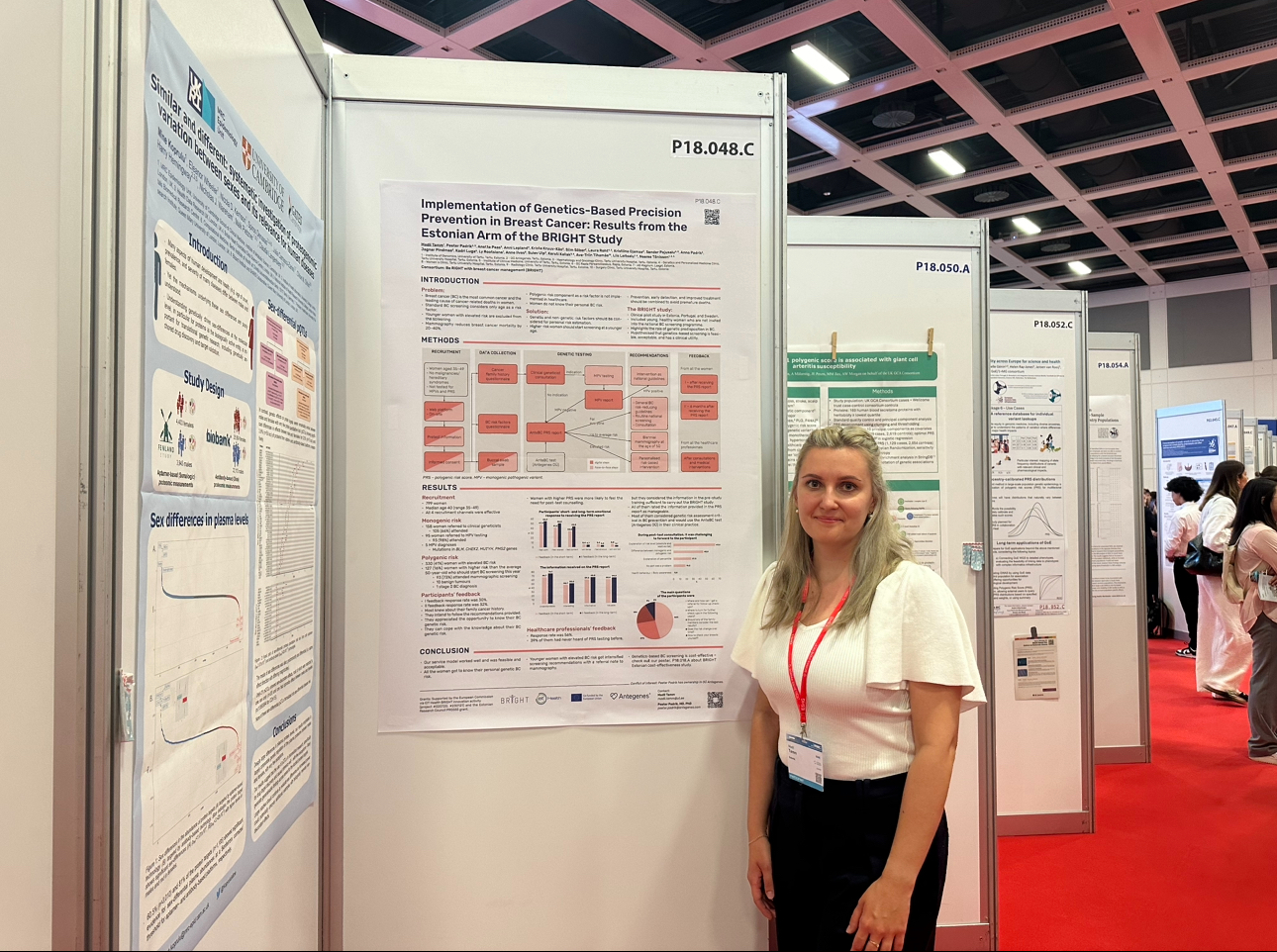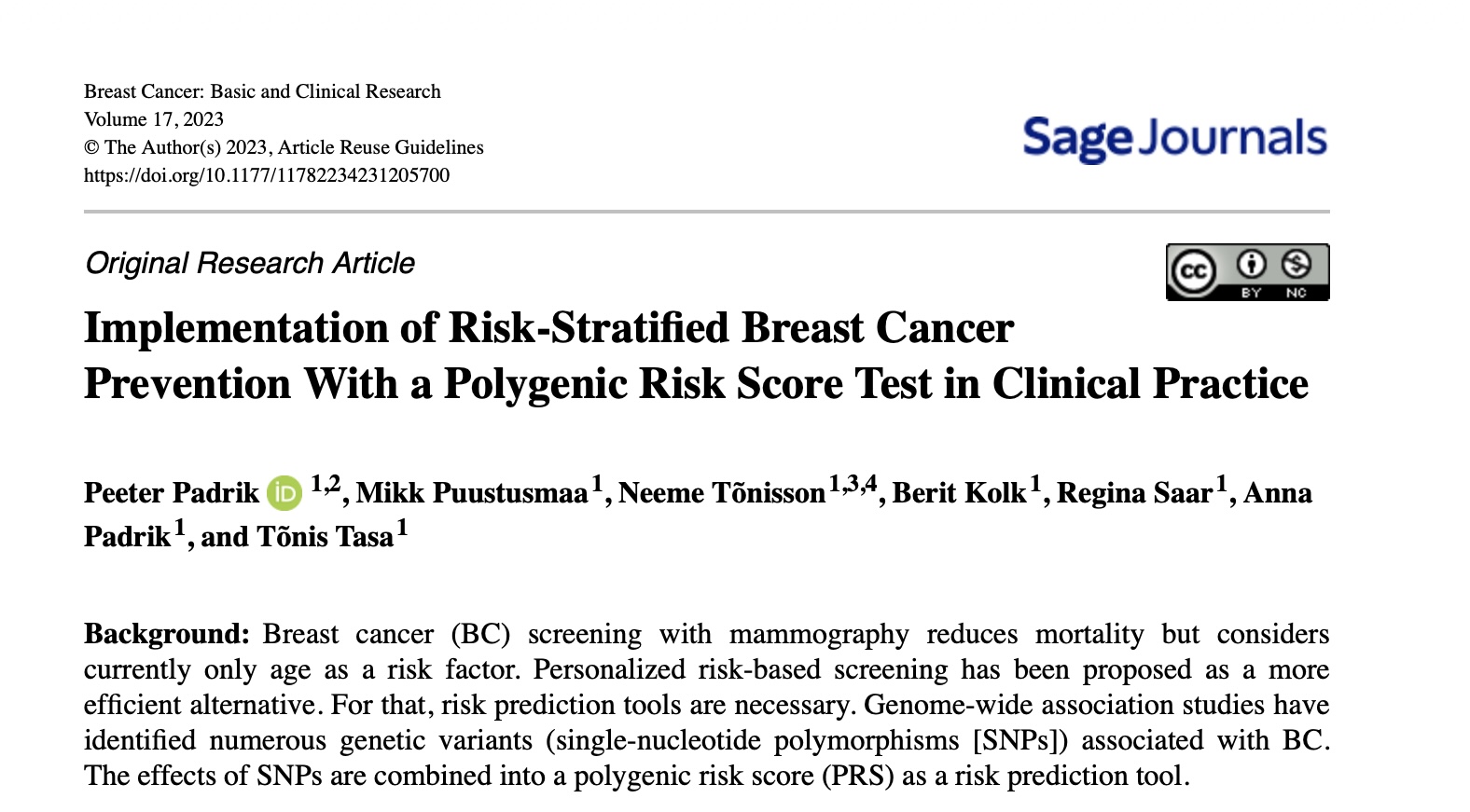
The European Partnership for Personalised Medicine (EP PerMed) has awarded the title of “Best Practice” to the genetics-based personalised breast cancer prevention and screening service developed through the BRIGHT project and implemented with the Antegenes polygenic risk score (PRS) test.
The recognition highlights the project as a successful real-world implementation of personalised, risk-based breast cancer prevention within healthcare systems, marking an important milestone for the adoption of genomic medicine in Europe.
The full EP PerMed best-practice case can be viewed here:
Genetics-based Personalised Breast Cancer Prevention and Screening
Moving beyond age-based screening
Traditional breast cancer screening programmes in Europe are largely based on age alone, typically targeting women aged 50–69. While effective, this approach overlooks younger women who may already have a significantly elevated risk, and does not account for the wide variation in individual risk levels.
The personalised prevention model uses a polygenic risk score to identify women with higher genetic risk and offer earlier or more tailored screening and prevention. According to the EP PerMed best-practice description, our approach:
- Identifies women at increased genetic risk before standard screening age
- Enables earlier and more targeted interventions
- Has the potential to save 15 lives per 10,000 women through risk-based prevention
The service is primarily designed for cancer-free women aged 30–49 and provides personalised medical plans based on genetic risk, family history, and other factors.
A polygenic risk score (PRS) is the strongest independent risk factor for breast cancer. Rare monogenic pathogenic variants (MPVs) affect approximately 1.7% of the population. Based on a PRS for breast cancer, around 20% of women have a risk at such a level that they should start breast cancer screening at a significantly younger age.
Demonstrated real-world impact
The BRIGHT implementation study showed that among women aged 35–49:
- Over 41% had a risk higher than the average 50-year-old
- Around 15.5% started screening immediately based on their risk results
The service is already used in private healthcare in several European countries and is being introduced into public healthcare systems. The service will be implemented in Estonia in 2026 as a national PRS-based personalised breast cancer screening programme for all women aged 40. This programme will use a digital solution integrated into the Estonian e-Health infrastructure.
Why EP PerMed recognition matters
EP PerMed is a major European partnership funded under the EU Horizon Europe programme, bringing together national ministries, research organisations, and healthcare stakeholders to accelerate the adoption of personalised medicine across Europe.
Its Best Practice recognition is awarded to initiatives that demonstrate:
- Real-world clinical implementation
- Proven health impact
- Scalability across healthcare systems
Being selected as an EP PerMed Best Practice signals that the Antegenes-enabled model is not only scientifically sound, but also practical, scalable, and relevant for European health systems.
A new standard for prevention
The personalised breast cancer prevention service has already gained European-level recognition. The BRIGHT innovation team received second place in the European Institute of Innovation and Technology (EIT) Innovation Awards 2025, with the jury stating that it effectively created a new standard for personalised breast cancer prevention.
The EP PerMed Best Practice designation further confirms the clinical and public-health value of the approach, reinforcing its potential to transform breast cancer screening from a one-size-fits-all model into a personalised prevention strategy.